
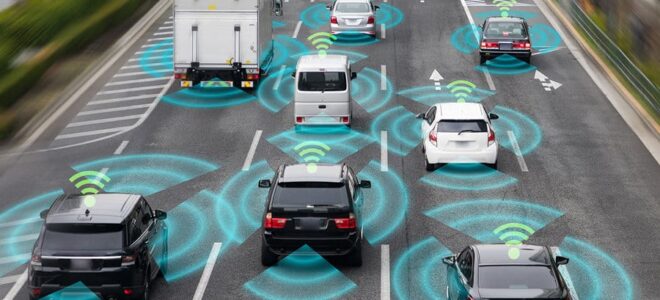
A decade ago, “safety features” mostly meant airbags, seatbelts, and maybe a backup camera if you sprung for the upgraded trim. Fast forward to 2026, and your average new car is closer to a rolling supercomputer than the family sedan your parents drove. Between always-on connectivity and increasingly sophisticated Advanced Driver Assistance Systems (ADAS), the cars rolling off lots this year are doing things that would have sounded like science fiction not that long ago.
And honestly, it’s about time. Traffic fatalities have been a stubborn problem for years, but the latest wave of vehicle technology is finally starting to move the needle in a meaningful way. Let’s get into what’s actually changed, why it matters, and what it means for anyone shopping for a new ride this year.
The Shift From “Nice to Have” to “Standard Equipment”
Just a few years ago, features like automatic emergency braking or lane-keeping assist were premium add-ons reserved for luxury trims. That’s no longer the case. Federal safety mandates and consumer demand have pushed automakers to make many ADAS features standard across nearly every new vehicle, regardless of price point.
This matters because safety technology only saves lives when people actually have it. A blind-spot monitor sitting in a brochure as an optional upgrade doesn’t prevent a single accident. A blind-spot monitor built into the base model of a compact crossover does. The democratization of these systems is arguably one of the most underrated safety stories of the last few years, and 2026 is the year it’s really hitting critical mass.
What ADAS Actually Looks Like in 2026
Source: challanwala.com
ADAS is a broad umbrella term, so it helps to break down what’s actually under the hood (so to speak) of today’s systems.
Smarter adaptive cruise control. Older adaptive cruise systems could be jerky, overcorrecting or braking too hard. The newer generation uses predictive algorithms that account for traffic flow several cars ahead, not just the vehicle directly in front, resulting in smoother, more human-like driving behavior.
Enhanced lane-centering and steering assist. Rather than just nudging you back when you drift, current systems actively keep the vehicle centered in its lane on highways, factoring in curves, road markings, and even faded paint that would have confused earlier cameras.
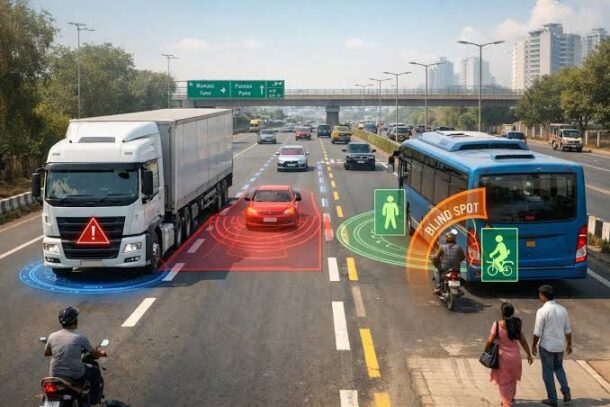
360-degree sensor fusion. This is the real game-changer. Instead of relying on a single camera or radar unit, 2026 vehicles increasingly combine cameras, radar, ultrasonic sensors, and in some cases lidar, cross-referencing the data from each to build a far more accurate picture of the car’s surroundings. If one sensor gets confused by glare or weather, the others can compensate.
Driver monitoring systems. Inward-facing cameras track eye movement and head position to detect drowsiness or distraction, issuing alerts before a moment of inattention turns into a crash. These systems have gotten noticeably less annoying too, with fewer false alarms than the early versions that seemed to chime every time you glanced at the radio.
Improved pedestrian and cyclist detection. This is a big one for city driving. Earlier generations of automatic emergency braking were tuned mostly for vehicle-to-vehicle scenarios. The latest systems are far better at recognizing pedestrians, cyclists, and even animals in low-light conditions, which is exactly when these accidents are most likely to happen.
Connectivity – The Quiet Partner in Crash Prevention
Source: umtri.umich.edu
ADAS gets most of the headlines, but connectivity is doing just as much heavy lifting behind the scenes, even if it’s less visible to the average driver.
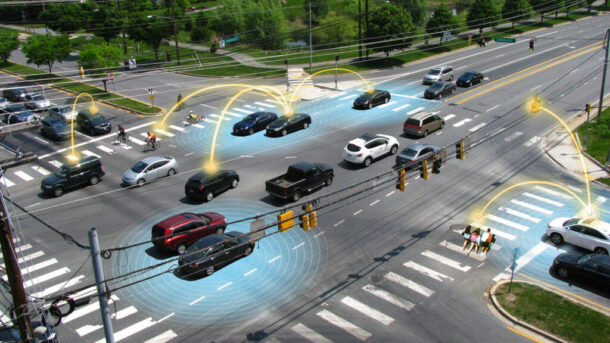
Vehicle-to-everything (V2X) communication is finally moving from pilot programs to real-world deployment in select cities and highway corridors. The idea is straightforward: vehicles, traffic signals, and infrastructure share data in real time. A car approaching a blind intersection can get a warning that another vehicle is barreling through from a cross street it can’t see. A construction zone ahead can broadcast a slowdown warning before the driver even spots the cones. It’s not universal yet, but the infrastructure is expanding, and the safety implications are significant.
Over-the-air (OTA) updates mean safety systems aren’t frozen in time the moment a car leaves the factory. If automakers identify a flaw in how their automatic braking handles a specific scenario, they can push a software fix directly to vehicles already on the road, the same way your phone gets updated overnight. This is a fundamental shift from the old recall model, where a safety issue might take months to actually get addressed in the vehicles that needed it.
Real-time traffic and hazard data pulled from connected vehicle networks now feeds back into navigation systems, warning drivers about accidents, debris, or sudden braking ahead, often before it would even be visible to the human eye. Some systems can detect when a vehicle several cars ahead slams on the brakes and alert your car’s systems before you’d naturally react.
Emergency response integration. Connected vehicles can now automatically notify emergency services with precise location data and crash severity estimates the moment a serious collision is detected, shaving precious minutes off response times in scenarios where every second counts.
Why These Two Trends Reinforce Each Other
It’s tempting to think of ADAS and connectivity as separate categories, but the real safety gains in 2026 come from how they work together. A car’s sensors can detect what’s immediately around it, but connectivity extends that awareness beyond line of sight. Think of it like the difference between having good peripheral vision and being able to see around corners.
For example, an ADAS system might detect a stopped vehicle ahead and apply emergency braking, but a connected system can warn the driver about that same hazard a quarter mile earlier, based on data from vehicles that already passed through the area. Combined, these systems are catching problems earlier and giving drivers (and the cars themselves) more time to react.
The Real-World Impact
Source: blog.sintef.com
It’s easy to be skeptical of automaker marketing copy that promises every new feature will revolutionize safety. So it’s worth looking at what’s actually happening on the road.
Insurance industry data has consistently shown that vehicles equipped with forward collision warning and automatic emergency braking see meaningfully fewer rear-end crashes compared to those without. Similarly, blind-spot monitoring has been linked to a notable reduction in lane-change collisions. These aren’t hypothetical benefits; they’re showing up in claims data and crash statistics.
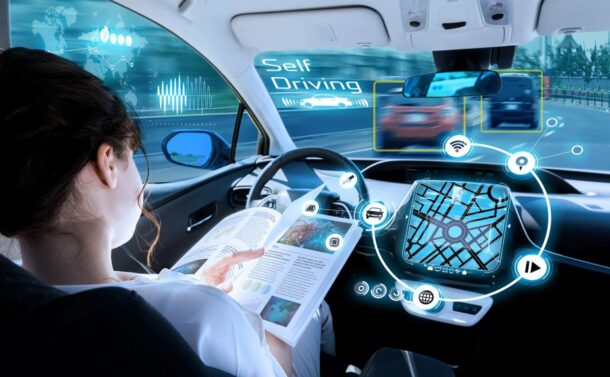
That said, it’s worth being honest about the limitations too. ADAS is an assistance system, not an autopilot. These technologies still struggle in heavy snow, fail occasionally in confusing lane-marking situations, and can lull overconfident drivers into paying less attention than they should. Smart connectivity is also only as good as the network coverage and infrastructure around it, meaning rural areas often lag behind urban centers in seeing the full benefit. None of this technology replaces attentive driving; it supplements it.
What This Means If You’re Shopping for a Car This Year
If you’re in the market for a new vehicle in 2026, here’s the practical takeaway: don’t assume all ADAS suites are created equal, even when the feature names sound identical across brands. “Adaptive cruise control” on one manufacturer’s system might behave completely differently than another’s. It’s worth test-driving these features specifically, not just the car itself, paying attention to how smoothly the lane-centering feels or how natural the automatic braking response is in everyday traffic.
It’s also worth checking whether a vehicle supports OTA updates for its safety systems, since this can mean the difference between a car that improves over time and one that’s locked into whatever software it shipped with. And if you’re someone who does a lot of highway driving, look specifically at how the vehicle’s sensor suite performs at higher speeds, since that’s historically been a weaker point for some of the camera-only systems.
The Road Ahead
We’re still in the middle of a transition, not at the finish line. Fully autonomous vehicles remain further off than some predictions suggested a few years back, but the gap between “driver assistance” and genuinely intelligent, connected vehicles is closing fast. The 2026 model year represents a meaningful checkpoint in that journey: a moment where these technologies have moved from flashy options to genuine, measurable safety improvements that most drivers will experience without even thinking about it.
The cars themselves are becoming better collaborators, not replacements, for the humans behind the wheel. And for anyone who’s ever had a close call on the highway or worried about a teenager’s first solo drive, that’s a development worth paying attention to.